7 Reasons Storage Garden Integration Saves Budget Preppers Money
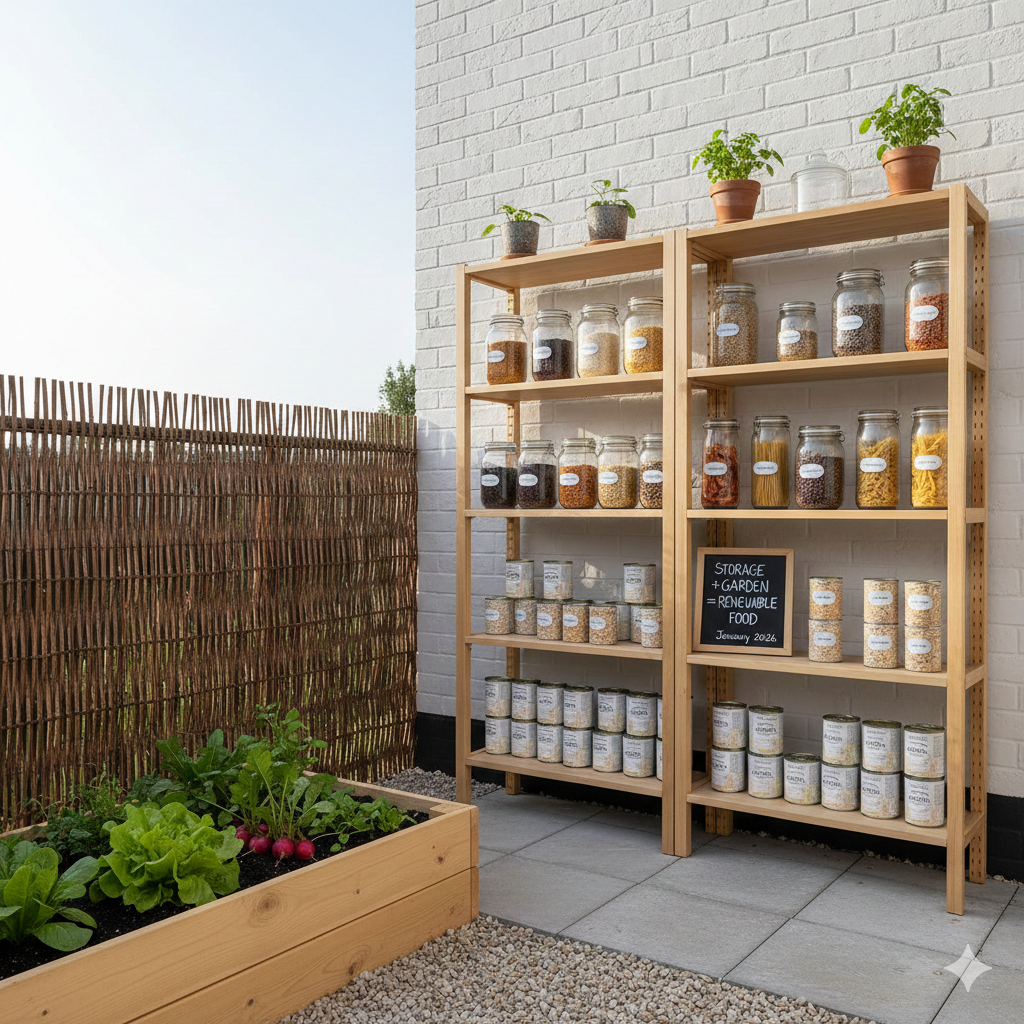
Storage garden integration is one of the most overlooked steps in budget prepping, yet it quietly determines whether stored food becomes a long-term asset or a temporary illusion of preparedness. Many households focus on stacking shelves first, only to realize later that nothing in their system replaces what gets eaten.
This article explains why connecting food storage to even a modest garden matters, how it stabilizes your budget over time, and how to think about storage and growing as one continuous system rather than two separate projects.
Why Storage Alone Breaks Under Budget Pressure
Stored food is finite by design. Without a replacement plan, every meal moves you closer to an empty shelf.
Budget prepping amplifies this problem because limited funds reduce the ability to restock quickly. As explained in Food Storage on a Budget, stored food works best when it reduces spending spikes—not when it creates them later. When replacement costs arrive all at once, storage without production often creates financial strain instead of the stability most budget preppers expect. A garden, even a small one, changes the equation by introducing renewal.
Storage garden integration does not require homesteading or acreage. It requires planning food storage with replenishment already accounted for.
The Storage-to-Soil Continuity Framework
This framework treats food as a cycle, not a stockpile:
- Stored food supports you now
- Seeds and soil support you later
- Harvest feeds storage again
Unlike traditional storage plans that end at consumption, this approach closes the loop. It aligns well with the broader philosophy outlined in the Budget Prepping Made Simple hub, where sustainability matters more than volume.
What Foods Bridge Storage and Gardening Best
Not all stored foods integrate equally with gardening. Focus on overlap.
High-value bridge foods include:
- Dry beans and peas that mirror garden crops
- Canned tomatoes that correspond to high-yield plants
- Grains paired with calorie-dense garden additions like squash or potatoes
University extension services often recommend starting with crops that mirror stored staples because they simplify meal planning and rotation. This alignment reduces waste and decision fatigue.
How Gardening Stabilizes Food Rotation
Rotation problems usually appear quietly. Supplies expire, preferences change, and budgets tighten.
When storage garden integration is in place:
- Fresh harvests reduce pressure on stored goods
- Rotation slows naturally
- Mistakes become recoverable
This complements the ideas discussed in 7 Monthly Food Storage Review Habits That Save Money, but adds a production layer that reviews alone cannot provide.
Budget Reality: Gardens Reduce Long-Term Spend, Not Short-Term Bills
Gardens rarely save money in the first month. They save money in the third, sixth, and twelfth.
USDA guidance consistently emphasizes that gardens work best when planned around repeat harvests and staple foods rather than novelty crops. When paired with stored food, gardens act as a buffer during tight months instead of a hobby expense.
Ready.gov also stresses storing foods your household actually eats—a principle that applies equally to what you grow.
Common Integration Mistakes to Avoid
- Planting foods you don’t store
- Storing foods you can’t grow or replace
- Starting both systems at full scale
Start small. A few containers, a modest bed, or even herbs can begin aligning storage with production.
For background on the values driving this approach, see the About page, which explains why preparedness should reduce stress, not create it. Site policies governing content use are outlined clearly on the Terms & Privacy pages.
Final Thought: Integration Is What Makes Budget Prepping Durable
Storage buys time. Gardens buy continuity.
When storage garden integration becomes intentional, preparedness stops being a countdown and starts becoming a system. For budget preppers, that shift matters more than any single purchase.