Frugal Emergency Planning: 6 Practical Steps for Preparedness on a Budget
Frugal emergency planning does not begin with buying supplies. It begins with understanding risks, setting priorities, and building habits that fit real budgets and real households. When planning is measured and orderly, preparedness becomes sustainable rather than overwhelming. For households with limited income, clarity and consistency matter far more than quantity.
This guide outlines practical, low-cost steps that support frugal emergency planning without waste or pressure, aligning with the principles taught throughout the Budget Prepping Hub.
- Define the Emergencies That Actually Matter
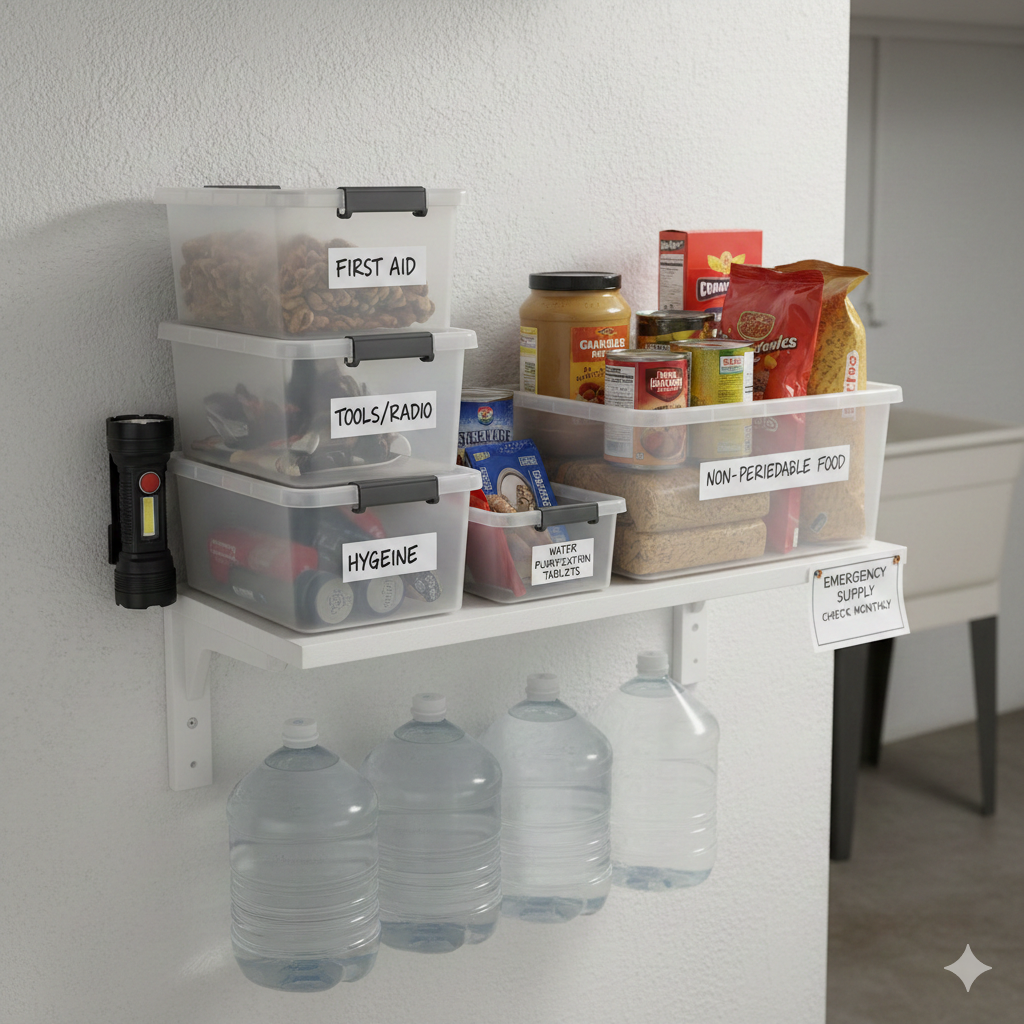
Simple Organization Supports Frugal Emergency Planning Without Excess
One of the most overlooked aspects of frugal emergency planning is basic organization. Without it, even modest preparation efforts can feel chaotic or ineffective.
Organization does not require new containers or labeled shelving systems. It begins with awareness: knowing what you already have, where it is stored, and how often it is used. When supplies are visible and accessible, households are less likely to overbuy or forget essential items during a disruption.
Order creates calm. Calm supports better decisions.
Define the Emergencies That Actually Matter
Effective frugal emergency planning starts with relevance. Not every possible scenario deserves equal attention, especially when resources are limited.
Begin by identifying the most likely disruptions in your area, such as short-term power outages, severe weather, or temporary job interruptions. Public guidance from Ready.gov’s household preparedness resources helps clarify common regional risks and realistic response expectations.
Focusing on probable events prevents unnecessary purchases and keeps planning grounded in reality. Preparedness should reduce stress, not multiply it.
Stabilize Daily Needs Before Expanding Preparedness
Preparedness built on unstable routines does not last. Before expanding into emergency planning, ensure daily needs are reasonably managed.
This includes:
- A workable monthly spending plan
- Reliable access to food and utilities
- Basic household organization
Frugal emergency planning works best when it strengthens what already exists rather than compensating for unmanaged daily habits. Stability creates a foundation that supports preparedness instead of undermining it.
Readers who want to understand the values guiding this approach can learn more on the About Page).
Build Skills That Reduce Dependence on Supplies
Supplies help, but skills multiply their value. Learning how to cook from basic ingredients, manage simple repairs, or plan meals stretches limited resources further and reduces reliance on stored goods.
University extension services often provide free, practical education. For example, USDA Cooperative Extension food safety and storage guidance offers reliable instruction that supports informed decision-making without added cost.
In frugal emergency planning, skills reduce panic buying and encourage calm, adaptable responses when conditions change.
Organize Systems Before Adding Quantity
Disorganization is often mistaken for shortage. In frugal emergency planning, systems matter more than volume.
Before adding more supplies, establish:
- Clear storage zones
- Simple rotation habits
- Basic inventory awareness
Without these systems, additional items create clutter rather than confidence. Over time, households forget what they own and mistake quantity for readiness. For food-related organization methods, review the Budget Food Storage Basics article.
Systems turn supplies into usable resources instead of forgotten stockpiles.
Expand Slowly and Review Regularly
Small, repeatable actions outperform large, infrequent purchases. One intentional step at a time creates feedback and control.
Examples include:
- One preparedness task per week
- One modest purchase per month
- Regular reviews instead of constant expansion
Frugal emergency planning improves when each step is evaluated before the next is added. This approach prevents waste and allows adjustments before small mistakes become expensive ones.
Let Knowledge Guide Timing and Decisions
“Also it is not good for a person to be without knowledge, And he who hurries his footsteps errs.”
— Proverbs 19:2 (NASB)
This verse highlights the risk of haste without understanding. In preparedness, rushing purchases without knowledge often leads to waste, confusion, and misplaced confidence. Knowledge—of risks, storage limits, and household capacity—guides proper timing and prevents costly mistakes.
Preparation rooted in understanding produces steady progress rather than reactive accumulation.
Preparedness That Fits Real Life
Frugal emergency planning is not about doing everything at once. It is about building readiness that fits your circumstances, income, and responsibilities.
When risks are defined, systems are established, skills are developed, and expansion is guided by knowledge, preparedness becomes manageable and durable over time.
For clarity on site boundaries and data practices, please review the Terms & Privacy Pages.