Budget Gardening for Preppers: A Calm, Low-Cost Starting Plan
Many people approach preparedness as a shopping problem, but long-term resilience works better when it includes production, not just storage. Budget gardening for preppers is not about self-sufficiency fantasies or expensive setups. It is about intentionally growing some food, somewhere, in a way that reduces risk, stretches resources, and supports the rest of your preparedness plan.
A garden does not replace food storage. It strengthens it. Even a modest garden changes how much you rely on stores, how often you rotate food, and how well you understand what your household actually eats.
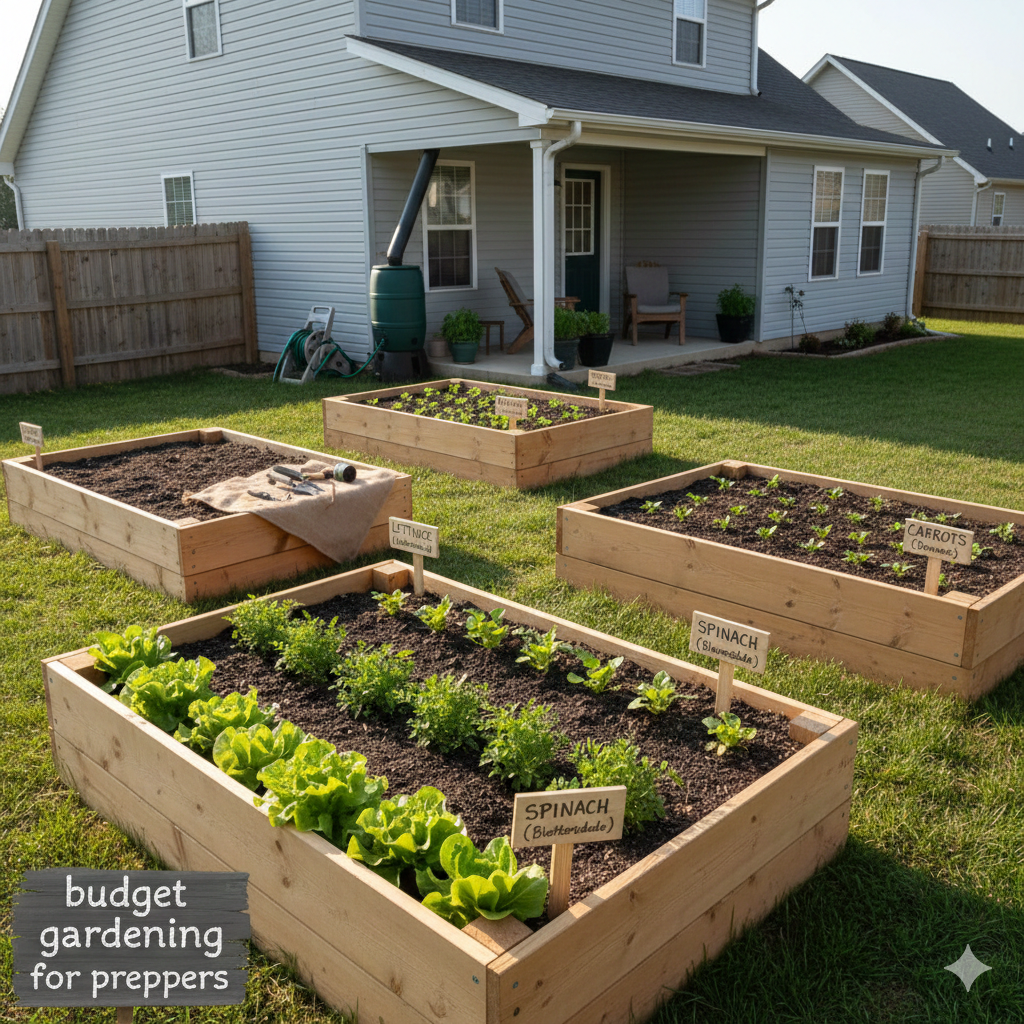
Why Budget Prepping Should Include a Garden
Preparedness without production quietly creates blind spots. When all food is purchased, stored, and rotated, you are vulnerable to price spikes, supply gaps, and quality issues. A small garden reduces those pressures without requiring large land or constant labor.
Budget gardening for preppers focuses on three outcomes:
- Supplementing calories and nutrients you already store
- Reducing grocery dependence during peak seasons
- Building practical food skills before they are needed
This aligns naturally with the broader philosophy explained in the Budget Prepping hub, where preparedness is treated as a system rather than a pile of supplies.
The “Supplemental Yield” Framework
This article uses the Supplemental Yield Framework, which treats gardening as a support layer rather than a primary food source. The goal is not abundance; the goal is reliability.
Under this framework, a prepper garden should:
- Be small enough to manage consistently
- Produce foods you already buy and store
- Fit your climate, space, and schedule
This avoids the common failure point of overplanting and under-maintaining.
Choosing the Right Garden Size for Your Situation
Budget gardening for preppers starts with honest constraints. Space, time, and water matter more than enthusiasm.
A practical starting point might include:
- One raised bed
- A short row along a fence
- Containers on a patio or balcony
University extension services consistently recommend starting small to reduce burnout and waste, especially for first-time gardeners. This mirrors the logic used in Food Storage on a Budget, where gradual buildup prevents costly mistakes.
What to Grow First (and What to Skip)
Not all crops serve preparedness equally. The best starter crops for budget gardening for preppers share three traits: they are familiar, flexible, and forgiving.
Good options include:
- Leafy greens for frequent harvest
- Bush beans for protein support
- Zucchini or squash for high yield
- Herbs that reduce reliance on store-bought seasoning
Skip crops that require specialized tools, long seasons, or constant pest control early on. The goal is confidence, not complexity.
How Gardening Supports Food Storage and Rotation
Gardening and storage reinforce each other. When you harvest even small amounts of food, you naturally think more clearly about rotation, preservation, and waste.
For example, excess produce can be dehydrated, frozen, or pressure-canned in small batches, reinforcing habits discussed in Food Storage Rotation on a Budget: 5 Simple Steps That Actually Work. Ready.gov emphasizes storing foods your household already eats, and a garden helps reveal that truth quickly.
Budget Controls That Keep Gardening From Becoming a Money Pit
Budget gardening for preppers fails when it becomes gear-driven. You do not need elaborate irrigation, premium soil blends, or decorative beds to get started.
Strong budget controls include:
- Using local compost or leaf mulch
- Saving seeds from open-pollinated plants
- Borrowing or sharing tools when possible
Consumer.gov routinely warns against impulse purchases driven by fear or urgency, a principle that applies equally to preparedness gardening.
Common Quiet Failures to Avoid
Many gardens fail quietly, not dramatically. They are planted, ignored, and then abandoned.
Watch for these warning signs:
- Planting more than you can water consistently
- Growing foods no one in your household eats
- Treating gardening as seasonal instead of ongoing
Preparedness gardening works best when it becomes routine, not heroic.
How Gardening Fits Into a Calm Preparedness Plan
Budget gardening for preppers is not about control. It is about margin. A small garden adds margin to your food plan, your budget, and your confidence.
For readers new to the philosophy behind this site, the About page explains why preparedness should reduce anxiety, not amplify it. That same principle applies here. Gardening is a tool, not a test.
As you continue refining your preparedness systems, reviewing the site’s Terms and Privacy pages clarifies how content is structured and maintained for long-term clarity and trust.