5 Budget Food Storage Planning Steps That Prevent Costly Mistakes
Most food storage problems don’t start with spoiled food or empty shelves—they start much earlier, at the planning stage. Budget food storage planning is the quiet step many people skip, especially when motivation is high but money and space are limited. Buying food before you understand where it will live, how fast you’ll use it, and what it replaces almost guarantees waste.
This article walks through a simple, realistic planning process designed for people who are ready to start—but need structure before spending a dollar.
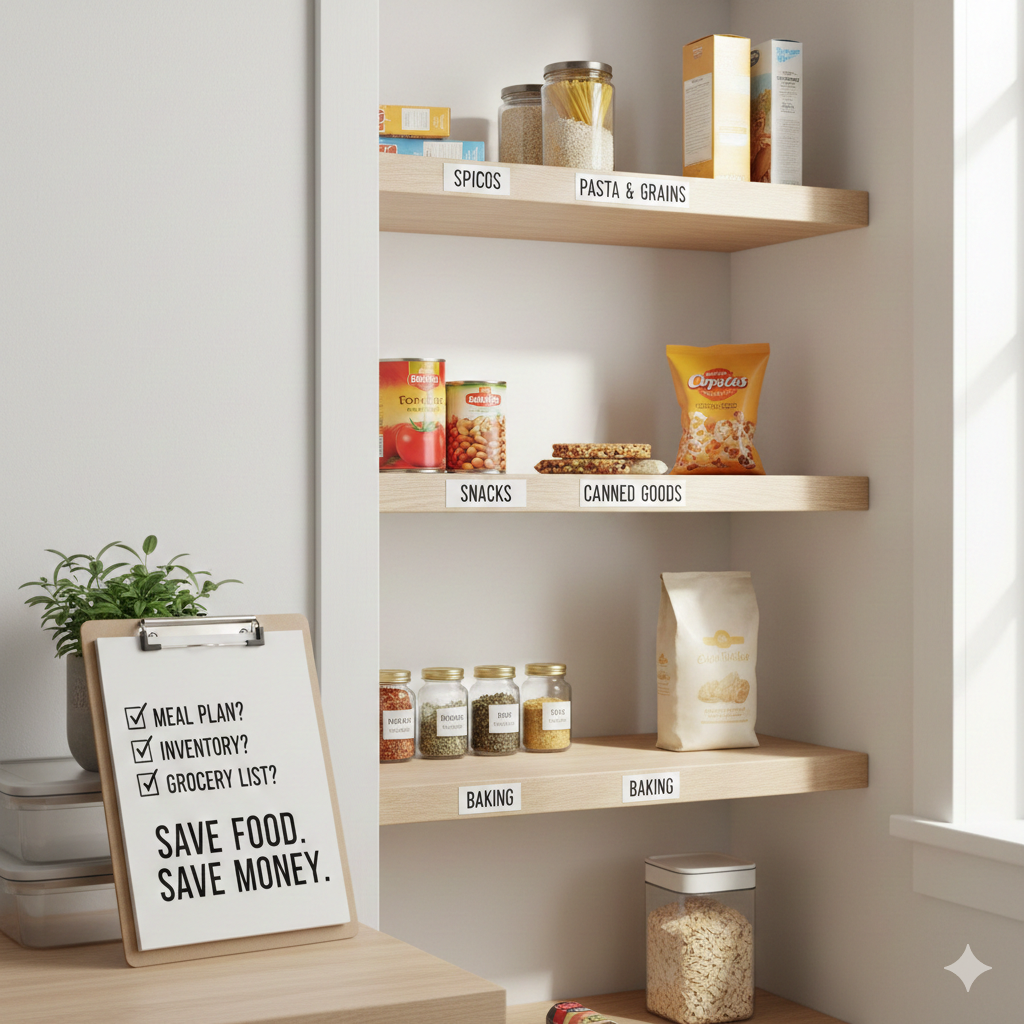
Step 1: Measure Your Real Storage Space (Not the Ideal One)
Before thinking about food types or quantities, identify actual usable space. This includes shelves, closets, under-bed bins, or cabinets—not garages or basements you hope to organize later.
Take five minutes to:
- Count shelf widths and depths
- Note temperature-stable locations
- Identify areas already holding household items
This aligns with guidance from university extension services that emphasize matching food storage volume to climate-appropriate space, not aspiration. Planning around real constraints keeps purchases realistic.
Step 2: Define a Short, Specific Time Horizon
Budget food storage planning works best when you start small. Instead of aiming for “months of food,” define a clear window, such as:
- Two extra weeks of normal meals
- One additional grocery cycle buffer
Short horizons reduce overwhelm and align with USDA food storage guidance, which stresses rotation and familiarity over bulk accumulation. You are planning for use, not display.
Step 3: Map Storage to Meals You Already Eat
A common mistake is storing food you think you should eat. Instead, list:
- 5–7 meals your household already prepares
- Ingredients that overlap across meals
- Items with multiple uses
This planning step prevents duplicate purchases and supports consistency. It also reinforces habits encouraged by Ready.gov, which focuses on storing foods your household will actually consume during disruptions.
Step 4: Set a Hard Budget Ceiling Before Shopping
Decide your limit before you shop—even if it’s small. Budget food storage planning improves discipline by forcing trade-offs:
- One large bulk item vs. several flexible items
- Shelf-stable vs. refrigerated rotation
A fixed ceiling protects against impulse buys and keeps food storage aligned with broader budget prepping priorities outlined in the Budget Prepping hub.
Step 5: Create a Simple Placement Rule
Every stored item should have a designated home before purchase. Ask:
- Which shelf?
- Which bin?
- Which container?
If an item has no place, it doesn’t get bought yet. This rule prevents clutter creep and makes future rotation easier, reducing the need for corrective audits later.
Why This Planning Step Matters More Than Buying Deals
Unplanned food storage often creates:
- Hidden waste
- Forgotten items
- Budget regret
Planning first avoids the silent failure modes covered in later Food Storage spokes, while reinforcing calm, intentional decision-making. It also supports long-term consistency without requiring specialized gear.
Common Quiet Failures to Watch For
Even with planning, watch for:
- Buying “one more item” without updating space
- Storing food outside temperature-safe areas
- Ignoring how often items are actually used
These are early warning signs—not emergencies—but catching them early preserves both money and momentum.
Final Thoughts
Budget food storage planning isn’t about perfection. It’s about placing boundaries before purchases so your storage grows steadily instead of chaotically. Starting with planning makes every future step—rotation, review, and maintenance—simpler and cheaper.
For deeper guidance on safe storage conditions and rotation principles, consult university extension resources on home food storage, which reinforce planning-first approaches grounded in everyday households.
Learn more about The Frugal Prepper, or review our Privacy Policy and Terms of Service.