7 Budget Food Storage Basics That Actually Work
Preparing your household does not require expensive systems or large bulk purchases. Understanding budget food storage basics allows you to build meaningful resilience gradually—using what you can afford and will actually use.
This approach emphasizes foresight, stewardship, and practicality rather than urgency or excess.
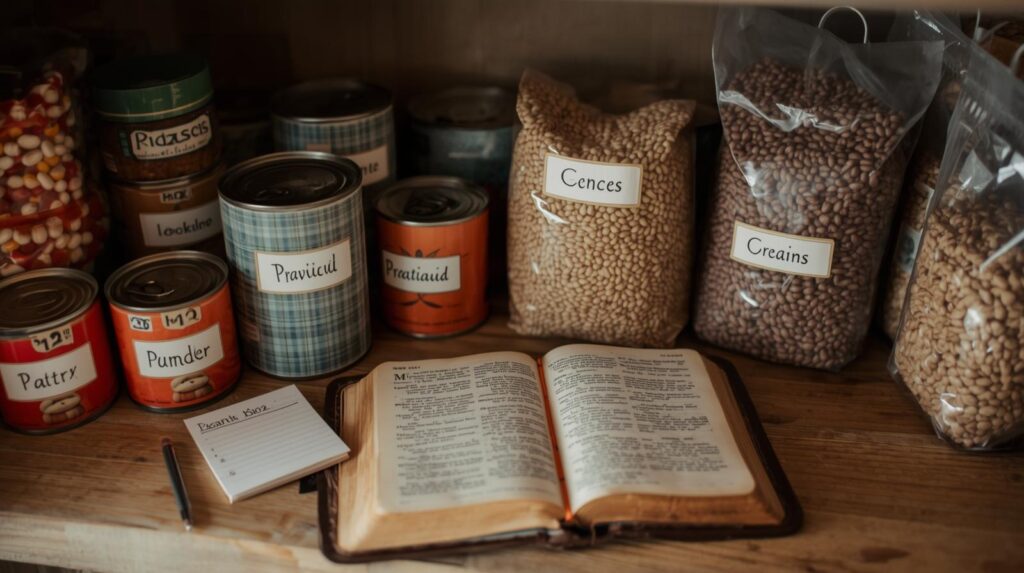
1. Start With Foods You Already Eat
The most reliable budget prepping food storage plan approach begins with familiar foods. Storing items your household already uses ensures rotation happens naturally and reduces waste.
Common examples include:
- Rice, oats, pasta, and dry beans
- Canned vegetables, meats, and fruits
- Cooking oils and basic seasonings
This helps keep food storage functional and sustainable.
2. Buy Shelf-Stable Items With Purpose
A core principle of budget food storage basics is aligning quantity with shelf life. Items with shorter expiration windows should be stored in smaller amounts, while long-term staples can be built gradually. Official guidance such as the USDA food storage guidelines can help households understand safe storage timelines and conditions.
Always evaluate:
- Best-by or expiration dates
- Storage conditions (cool, dark, dry)
- Realistic household consumption
It is important to distinguish between “best-by” dates and true spoilage. Many shelf-stable foods remain usable well beyond printed dates when stored properly, while others degrade quickly once opened or exposed to heat and moisture. Understanding these differences allows households to set realistic quantity limits, prioritize rotation, and prevent spoilage, unnecessary waste, or overbuying.
3. Build Storage in Small, Consistent Steps
Avoid large one-time purchases that strain finances or overwhelm storage space. Progress is best made incrementally, with steady additions that fit both budget and storage capacity.
Practical examples:
- One extra item per grocery trip
- One bulk staple added monthly
- Gradual expansion of shelving or containers
Consistency matters more than speed.
4. Organize for Visibility and Rotation
Disorganization leads to forgotten supplies, unnecessary repurchasing, and wasted effort.
Basic organization practices include:
- Storing newer items behind older ones
- Grouping similar foods together
- Keeping dry goods separate from canned items, with water stored below
- Clearly labeling shelves and containers
Proper organization supports rotation and prevents waste. Federal emergency preparedness guidance, including Ready.gov’s food storage recommendations, emphasizes keeping food visible, accessible, and regularly rotated.
5. Track What You Have (Simply)
Inventory tracking does not require software or complexity. A notebook, spreadsheet, or simple checklist is sufficient. A visible notepad hung in or near storage areas can work especially well.
Track:
- Item name
- Storage location (shelf or level)
- Quantity
- General expiration window
Tracking prevents the gradual accumulation of rarely used or forgotten items. Regular inventory reviews make it easier to adjust future purchases, reduce duplication, and identify gaps that truly matter. This keeps food storage responsive to real household needs rather than assumptions or impulse buying.
6. Avoid “Gear-First” Thinking
Food storage succeeds through fundamentals, not gadgets. Specialized gear often diverts resources away from what actually matters.
Prioritize spending on:
- Food
- Water storage
- Basic household necessities
Infrastructure should support supplies—not replace them.
7. Plan Before Expanding
“A prudent person sees evil and hides himself, But the naive proceed, and pay the penalty.”
— Proverbs 22:3 (NASB)
This verse highlights the value of foresight and restraint. In food storage, prudence means evaluating risks, planning systems, and establishing habits before expanding quantities. Acting without preparation leads to waste, confusion, and unnecessary expense. Thoughtful planning ensures that every step contributes to long-term household resilience..
Start Small, Build Consistently
Budget food storage basics are not about fear or excess. They are about steady, faithful stewardship rooted in the principles guiding this site. When supplies are selected carefully, organized intentionally, and managed responsibly, even modest efforts provide meaningful security over time.
For details on how this site operates, including content boundaries and data practices, please review the site’s Terms and Privacy policies.