Budget Prepper Maintenance: 9 Quiet Mistakes Costing You Money
Most preparedness losses don’t happen during emergencies. They happen quietly, over time, through neglected systems. Budget prepper maintenance is rarely dramatic, but it determines whether stored supplies save money or slowly bleed it away. When systems aren’t reviewed, rotated, or protected, even well-planned prepping becomes an expensive illusion.
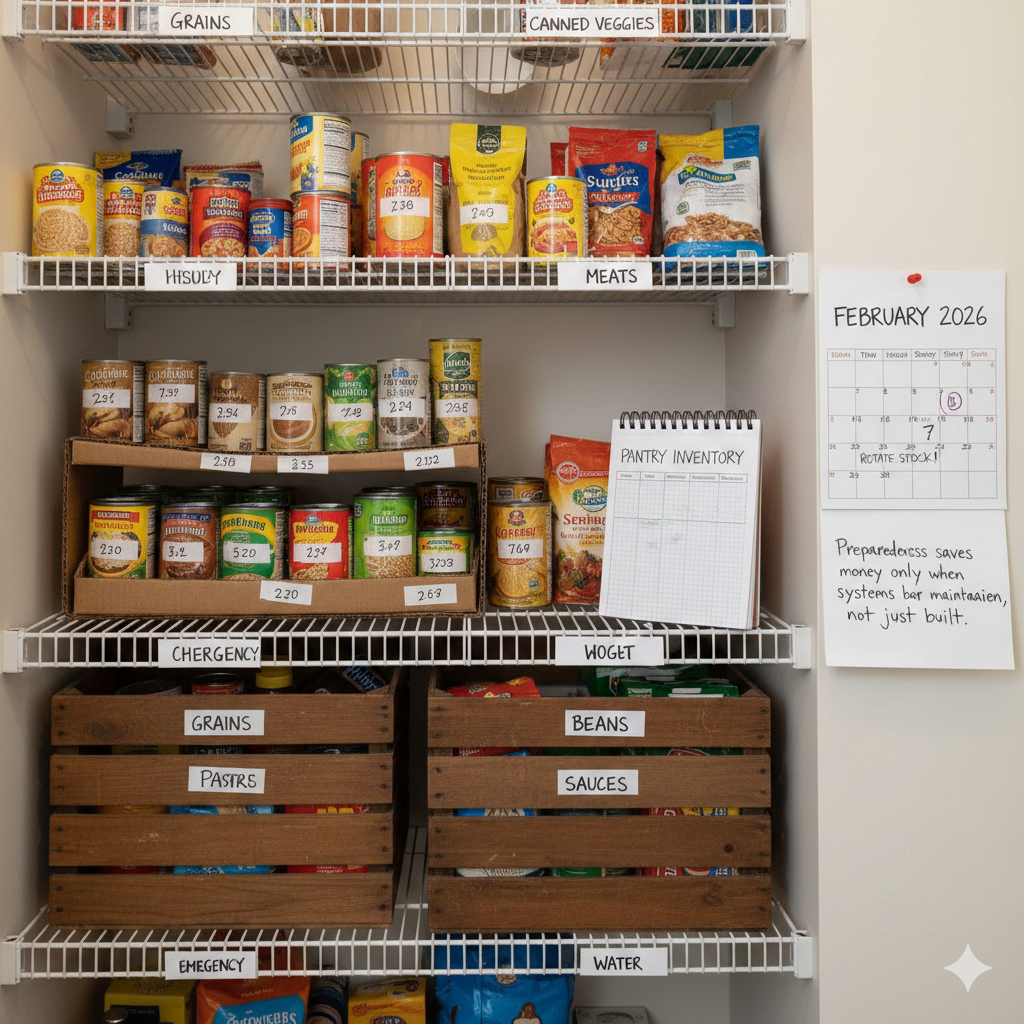
Why Budget Prepper Maintenance Failures Cost More Than Shortages
Shortages are visible. Maintenance failures are not.
A missing item is noticed immediately. A slowly degrading system is not. Expired food, moisture damage, pest intrusion, and forgotten inventory all represent paid-for resources that deliver no value. For budget preppers, this loss hits harder because replacement funds are limited.
Unlike acquisition mistakes, maintenance failures compound quietly. Each ignored issue increases future replacement costs while reducing trust in the system itself.
The Loss Amplification Model Explained
The Loss Amplification Model explains why small maintenance lapses create outsized financial damage:
- Delayed Detection – Problems remain hidden until value is already lost
- Clustered Replacement Costs – Multiple items fail at once
- Emergency Rebuy Pressure – Replacements happen at retail prices, not planned sales
Over time, these forces reinforce one another. Delayed detection allows multiple small problems to mature into full losses, which then surface simultaneously. When several failures appear at once, budget households experience replacement shock rather than manageable adjustments. This creates a feedback loop where delayed awareness leads to clustered costs, and clustered costs force reactive purchasing. For households with limited discretionary income, this compounding loss erodes preparedness faster than any single shortage ever could. This is why budget prepper maintenance matters more than adding new gear. Preventing loss is cheaper than rebuilding capacity.
Common Quiet Failures That Drain Preparedness Budgets
Expired but Unnoticed Food
Food that expires unnoticed represents 100% loss. Even partial rotation, as discussed in the broader Food Storage on a Budget spoke, dramatically reduces waste when paired with review habits.
Environmental Drift
Temperature swings, humidity, and light exposure slowly degrade supplies. Without periodic checks, stored value erodes without warning.
Inventory Amnesia
When supplies aren’t reviewed, households repurchase what they already own. This creates duplicate spending and storage clutter.
Tool Neglect
Batteries corrode, seals dry out, and tools fail when never tested. Maintenance prevents surprise replacement costs.
Why Budget Constraints Make Maintenance More Critical
Higher-income households can absorb waste. Budget preppers cannot.
Every wasted item represents:
- Lost purchase power
- Lost time
- Lost confidence in preparedness systems
Maintenance stabilizes spending by spreading small, predictable efforts over time instead of forcing large, reactive expenses later.
This is why federal guidance from agencies like Ready.gov emphasizes not just storing supplies, but regular review and upkeep as part of household readiness.
Simple Maintenance Habits That Prevent Major Loss
Budget prepper maintenance does not require complexity. It requires consistency.
- Quarterly visual checks of storage areas
- Annual full rotation windows tied to seasons
- Environmental checks during extreme weather changes
- Inventory confirmation before shopping
The value of these habits lies in consistency, not intensity. A brief quarterly check prevents small issues from becoming expensive surprises, while infrequent “panic reviews” tend to uncover multiple failures at once. Light, recurring maintenance spreads costs predictably across the year instead of concentrating them into stressful replacement events. This is why maintenance stabilizes spending patterns, not just supplies—it converts preparedness from a reactive expense into a controlled system. University extension services routinely note that structured review schedules outperform larger storage volumes when it comes to food preservation and waste reduction.
The Hidden Psychological Benefit of Maintenance
Maintenance restores trust.
When systems are reviewed and functioning, confidence replaces anxiety. This reduces panic buying and impulse spending during news-driven scares—another indirect but real financial savings for budget preppers.
Preparedness works best when it feels reliable, not fragile.
Maintenance vs. Expansion: The Smarter Budget Choice
This decision reflects a system-level tradeoff, where maintenance interrupts a compounding loss loop while unchecked expansion amplifies delayed replacement costs.
Expanding storage without maintenance increases loss potential. Maintaining existing systems increases return on money already spent.
For most households, the highest preparedness ROI comes from protecting what is already owned, not acquiring more.
CONCLUSION
Preparedness failures rarely announce themselves. They accumulate quietly until value is gone. Budget prepper maintenance is not glamorous, but it is the difference between supplies that save money and supplies that silently waste it. Maintaining systems costs little—but neglect costs everything.
For more foundational context, the Budget Prepping Hub explains how maintenance fits into long-term financial resilience, while the About page outlines the philosophy behind preparedness without excess. Full site policies remain available through the Terms & Privacy pages for transparency.