7 Budget Water Rotation Checks That Prevent Silent Failure
Maintaining stored water is just as important as storing it in the first place. Without regular review, even clean water can degrade, containers can fail, and emergency supplies can quietly become unusable. A simple water rotation checklist allows budget-conscious households to verify safety, prevent waste, and maintain confidence in their emergency readiness without expensive equipment or complicated systems.
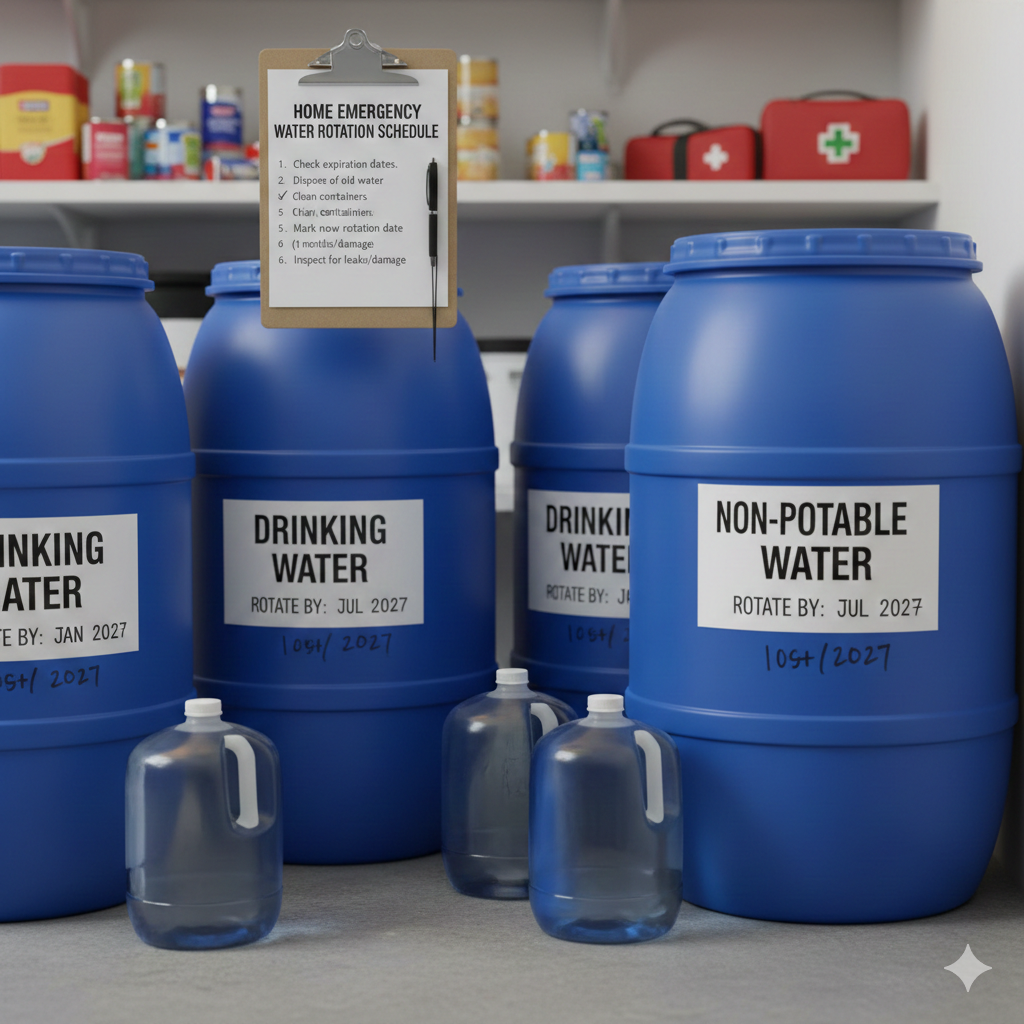
Why a Water Rotation Checklist Matters for Preparedness
Water does not spoil like food, but it is far from maintenance-free. Plastic containers degrade, seals loosen, and storage conditions change over time. Ignoring these realities can leave families with unusable water during an emergency. A routine rotation process transforms water storage from a static stockpile into a reliable preparedness system, which aligns with the long-term planning principles emphasized throughout the Budget Prepping Hub.
1. Inspect Containers as Part of Your Water Rotation Checklist
Start each quarterly review by examining every container. Look for:
- Cracks, warping, or brittleness in plastic
- Loose or damaged caps and seals
- Cloudiness or visible debris
According to USDA food and water storage guidance, containers that show any sign of structural degradation should be replaced immediately. This step alone prevents most silent water failures.
2. Confirm Storage Conditions Haven’t Changed
Environmental shifts often go unnoticed. During your water rotation checklist review, verify that containers remain:
- Out of direct sunlight
- Stored away from fuels, pesticides, or cleaning chemicals
- In a temperature-stable area that avoids freezing or extreme heat
This type of environmental risk awareness is a core principle explained on the site’s About Page, where preparedness is treated as an ongoing responsibility rather than a one-time task.
3. Rotate Stored Water on a Predictable Schedule
Rotation does not need to be complicated. Most emergency agencies recommend replacing stored water every 6–12 months unless commercially sealed. During each check:
- Empty older containers first
- Refill with fresh tap water
- Clearly relabel with the new fill date
Ready.gov emergency water guidance reinforces that predictable rotation schedules are more reliable than relying on memory or visual inspection alone.
4. Adjust Quantities Based on Real Household Needs
Life changes, and water storage should reflect that. Use your water rotation checklist to reassess:
- Household size or new dependents
- Pets and their daily water needs
- Climate or seasonal risks that may increase usage
This practical adjustment mindset mirrors the cost-control strategies discussed in related spoke articles within the Budget Prepping Hub, ensuring supplies stay realistic rather than excessive.
5. Sanitize Containers During Rotation
Rotation is the ideal time to clean containers. Before refilling:
- Wash with mild soap and warm water
- Sanitize using a diluted bleach solution (as recommended by University extension services)
- Air-dry completely before refilling
This step dramatically reduces bacterial risk and is often overlooked in low-effort storage plans.
6. Track Rotation Dates in a Simple Log
Documentation increases reliability. Your water rotation checklist should include:
- Date inspected
- Containers rotated or replaced
- Any issues identified
Written logs are widely recommended by University extension preparedness resources because they reduce skipped rotations and improve consistency over time.
7. Schedule the Next Review Immediately
Before closing your checklist, schedule the next review. Add a calendar reminder or tie it to another quarterly task, such as pantry rotation or smoke detector checks. Consistency is the foundation of effective maintenance-stage preparedness.
Final Thoughts on Using a Water Rotation Checklist
Preparedness fails quietly when maintenance is ignored. By inspecting containers, verifying storage conditions, rotating water predictably, and documenting each review, households protect their investment and ensure real-world readiness. A simple water rotation checklist keeps emergency supplies dependable without adding cost or complexity.
For deeper guidance on safe storage practices, review USDA household storage recommendations, Ready.gov emergency preparedness resources, and University extension publications that specialize in home water safety.
For site policies and planning transparency, readers can also reference the Terms of Service and Privacy Policy pages.