5 Quarterly Food Rotation Checks That Save Money and Reduce Waste
Maintaining a stockpileQuarterly Food Rotation Checks That Save Money and Reduce Waste
Maintaining a stockpile is not enough to ensure your household is prepared. Without consistent rotation, even carefully acquired food can quietly spoil over time, costing money and reducing readiness. A structured food rotation checklist ensures stored items remain safe, usable, and aligned with real household consumption patterns. By performing simple quarterly checks, you protect both your investment and your family’s health while reinforcing an efficient household system.
Quarterly food rotation protects your supplies and reduces waste.
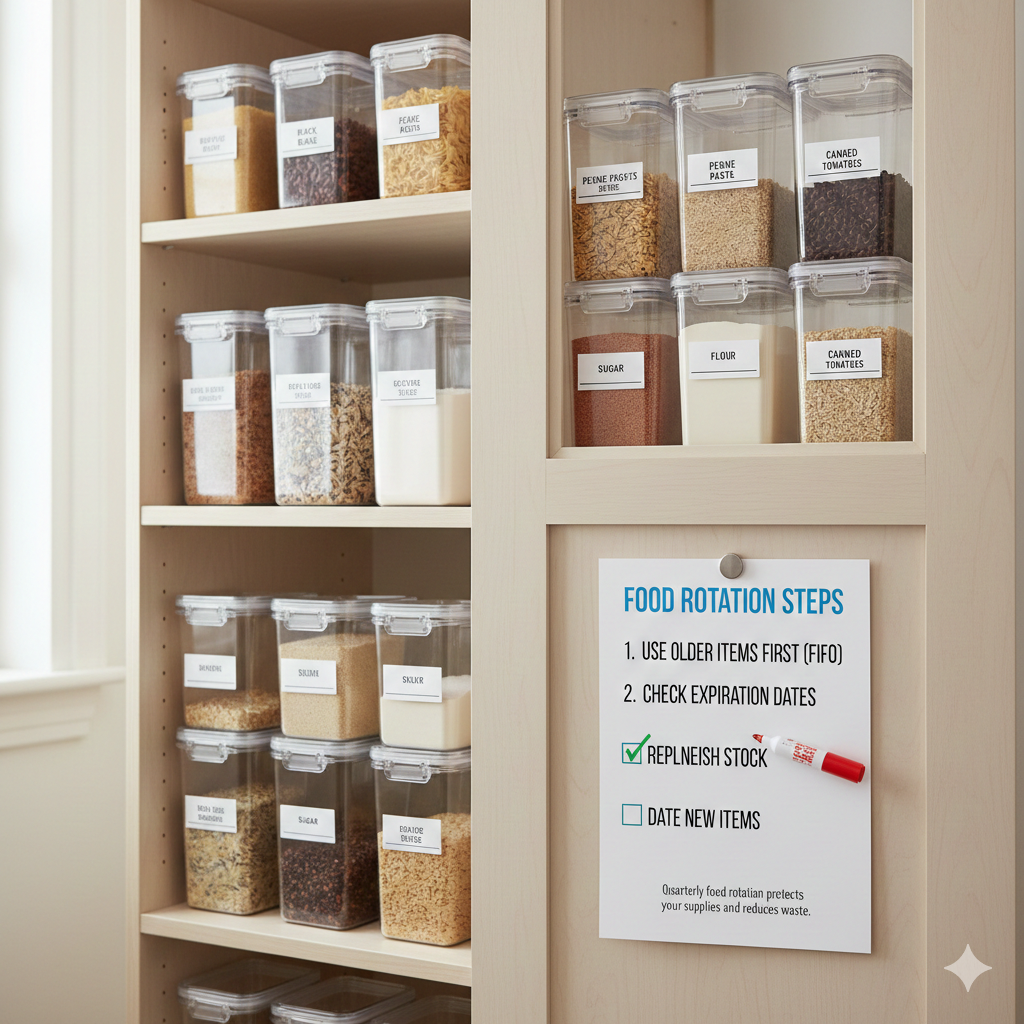
Why a Food Rotation Checklist Is Crucial
Stored food may appear stable, but containers, packaging, and storage conditions degrade over time. Overlooking rotation can result in expired items, nutritional loss, and potential contamination. Following a regular rotation routine transforms food storage from a passive accumulation strategy into a dynamic system of household readiness, fitting seamlessly into the Budget Prepping Hub philosophy of sustainability over accumulation.
1. Verify Container and Packaging Integrity
Begin by inspecting every item in your storage. Look for:
- Cracks, dents, or compromised seals
- Bulging cans or damaged packaging
- Signs of pests or moisture
Even minor container failures can lead to spoilage. Even seemingly intact cans may swell after temperature fluctuations, and tiny leaks in jars can attract pests or bacteria, which is why visual and tactile inspection is crucial. The USDA food storage guidelines emphasize proper container selection and regular inspection to prevent contamination and ensure safe storage practices.
2. Confirm Storage Conditions Remain Ideal
Environmental factors accelerate food degradation. During each review, ensure:
- Items are shielded from direct sunlight
- Stored away from chemicals, fuels, or cleaning agents
- Kept in temperature-stable, low-humidity areas
Check storage areas each season; heat waves, cold snaps, or humidity spikes can shorten shelf life. Adjust placement or add insulation if conditions fluctuate. Proactive environmental awareness aligns with the risk assessment tips found on the About Page for household preparedness.
3. Rotate Items by Expiration Dates
Rotation is the core of preventing waste. For each item:
- Check the “use-by” or best-before date
- Move older items to the front of the shelf
- Replace or consume expired or near-expired items
Use the first-in, first-out method: move older items forward and place newer items behind. For mixed packaging, create separate bins for open and unopened items to simplify rotation. Following Ready.gov’s emergency food rotation guidance ensures consumption before spoilage and keeps your supplies safe and ready.
4. Adjust Quantities to Current Household Needs
Household composition changes over time. During each rotation review:
- Recalculate daily or weekly consumption needs
- Adjust quantities for new family members, pets, or dietary considerations
- Remove or donate excess items that no longer match practical usage
Track weekly consumption and adjust for temporary changes, such as visiting relatives or short-term dietary needs, to maintain optimal storage without overstocking. This step prevents unnecessary clutter and aligns storage with real-world needs, echoing the budget-conscious approach described in the Budget Prepping Hub.
5. Document Each Step on Your Food Rotation Checklist and Schedule the Next Review
Logging your rotation helps maintain consistency. Record:
- Date of inspection
- Items rotated or replaced
- Any issues discovered and corrective actions taken
Set the next quarterly review immediately. Use a simple printed checklist or spreadsheet to make logging easy and shareable for all household members, reinforcing accountability. University extension services recommend written logs for household storage systems because documentation reduces errors and supports long-term reliability. For additional guidance, see University extension resources.
Final Thoughts
Preparedness is more than stockpiling—it’s maintaining trust in your stored resources. By verifying containers, checking storage conditions, rotating items, adjusting quantities, and documenting inspections, you prevent waste and maximize efficiency. Consistent application of a food rotation checklist ensures your household stays ready, reduces cost, and preserves nutrition.
By following this structured quarterly routine, you safeguard your food investment, reduce waste, and maintain family readiness, turning preparation into a simple habit. For further guidance on rotation strategies and storage best practices, see the USDA food storage guidelines, University extension resources, and the Budget Prepping Hub for related spoke articles.