5 Smart Water Storage Checks That Prevent Costly Mistakes
Introduction
Most preparedness failures do not happen when supplies are missing—they happen when stored resources quietly degrade over time. Water storage checks help prevent this kind of silent failure by ensuring your stored water is still safe, accessible, and usable when it matters. For households that already store water, routine review is more important than adding more containers. This is especially true for households that already consider water storage a completed task.
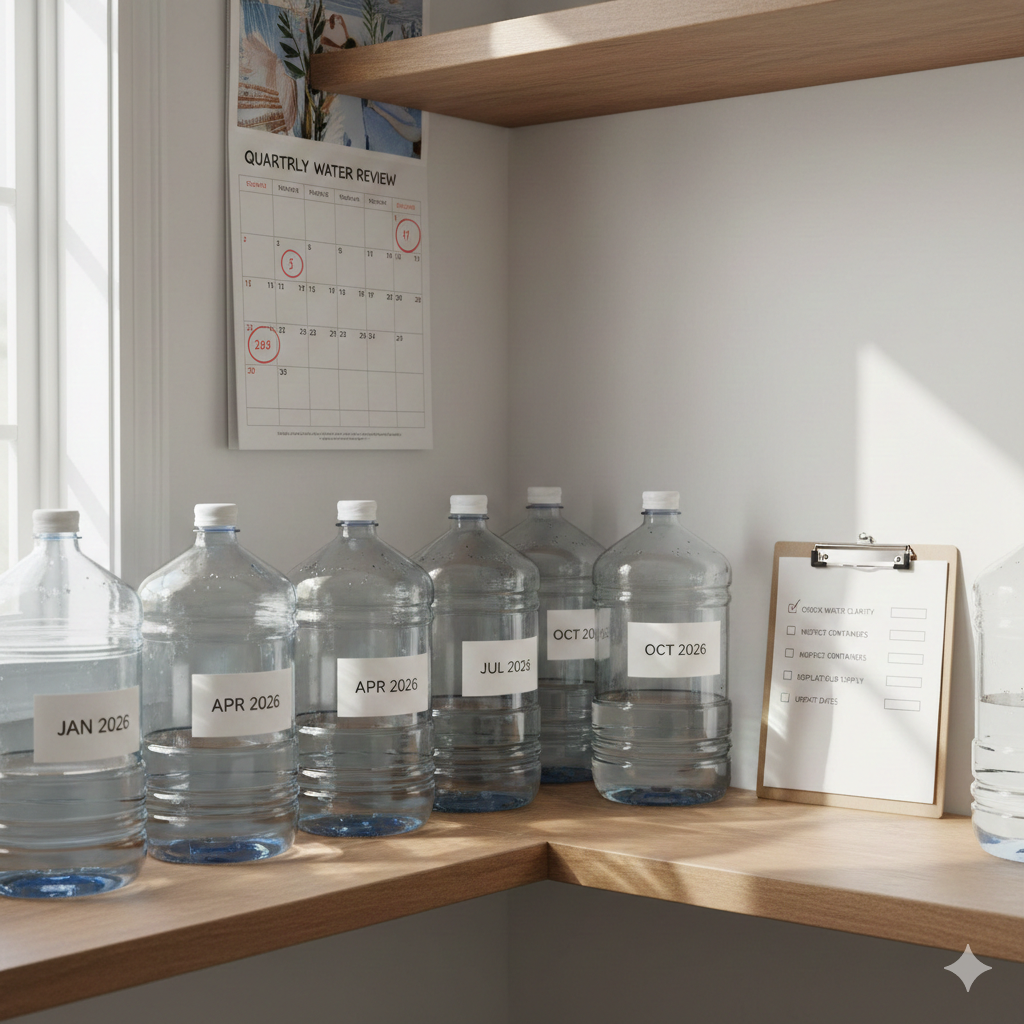
Why Water Storage Requires Ongoing Checks
Water does not spoil like food, but containers, seals, and storage conditions degrade or shift over time. Without routine checks, households may discover leaks, contamination, or missing supplies too late.
Water storage checks focus on verification, not expansion. This aligns with the broader philosophy explained in the Budget Prepping Hub, where sustainability matters more than accumulation.
1. Verify Container Integrity
Start each quarterly review by deliberately inspecting every water container in your system.
Look for:
- Cracks, bulging, or brittleness in plastic
- Loose or degraded caps
- Evidence of slow leaks or moisture underneath containers
Even small container failures can compromise gallons of water. The USDA’s guidance on food-safe water storage emphasizes food-grade materials and regular inspection to prevent contamination and plastic breakdown.
2. Confirm Storage Conditions Remain Stable
Even properly treated water stored in poor conditions degrades faster.
Check whether containers are:
- Shielded from direct sunlight
- Stored away from chemicals, fuels, or cleaning agents
- Kept in temperature-stable locations
If storage conditions have changed—such as moving items into a garage or basement—adjust placement before problems develop. This type of environmental awareness mirrors the risk-assessment mindset described on the About Page.
3. Review Rotation Dates and Labels
Every container should be clearly labeled with:
- Fill date
- Planned rotation date
- Treatment method (if applicable)
If labels are faded or missing, replace them immediately. Containers that exceed your planned rotation window should be used for non-emergency purposes and refilled.
For reference, Ready.gov’s emergency water guidance outlines recommended storage durations and emphasizes rotation as a core preparedness habit rather than a one-time task.
4. Match Water Quantities to Current Household Needs
Household size and usage change.
During each quarterly review:
- Recalculate daily water needs
- Adjust stored amounts for new family members, pets, or health considerations
- Remove excess containers that are no longer practical to maintain or realistically rotate.
This step prevents unnecessary clutter and aligns water storage with real-world consumption patterns, similar to how food rotation on a budget focuses on matching supply to actual use.
5. Document the Check and Set the Next Review
A simple written or digital log prevents forgotten items and steps of any system.
Record:
- Date of inspection
- Containers rotated or replaced
- Issues identified and corrected
Set the next review date immediately. Many households tie water storage checks to seasonal tasks, which reinforces consistency without adding mental load.
University extension services often recommend written logs for household storage systems because documentation reduces error and supports long-term reliability.
Final Thoughts
Preparedness is not only about acquiring supplies—it is about maintaining trust in what you already have. Water storage checks ensure your efforts remain effective, efficient, and aligned with real household needs. By reviewing container integrity, conditions, rotation, quantity, and documentation, you protect one of your most critical resources without spending more money.
This natural reality is acknowledged in Scripture, reminding us that maintenance is unavoidable.
In time of old You founded the earth, And the heavens are the work of Your hands. Even they will perish, but You endure; All of them will wear out like a garment; Like clothing You will change them and they will pass away — Psalm 102:25-26 (NASB)
For clarity on site use, content boundaries, and data practices related to this guidance, review the Terms & Privacy Pages.