7 Calm Home Safety Audit Checks That Save Money
A home safety audit is one of the most overlooked steps in budget preparedness. Instead of buying more supplies or adding new projects, a home safety audit helps you identify real risks, weak points, and wasted effort using what you already have. When done calmly and methodically, this process saves money, reduces stress, and strengthens every other preparedness decision you make.
This guide walks you through a simple, beginner-friendly home safety audit that can be completed in about 30 minutes. It fits naturally alongside the long-term planning principles taught in the Budget Prepping Hub and gives you a clearer picture of what truly needs attention.
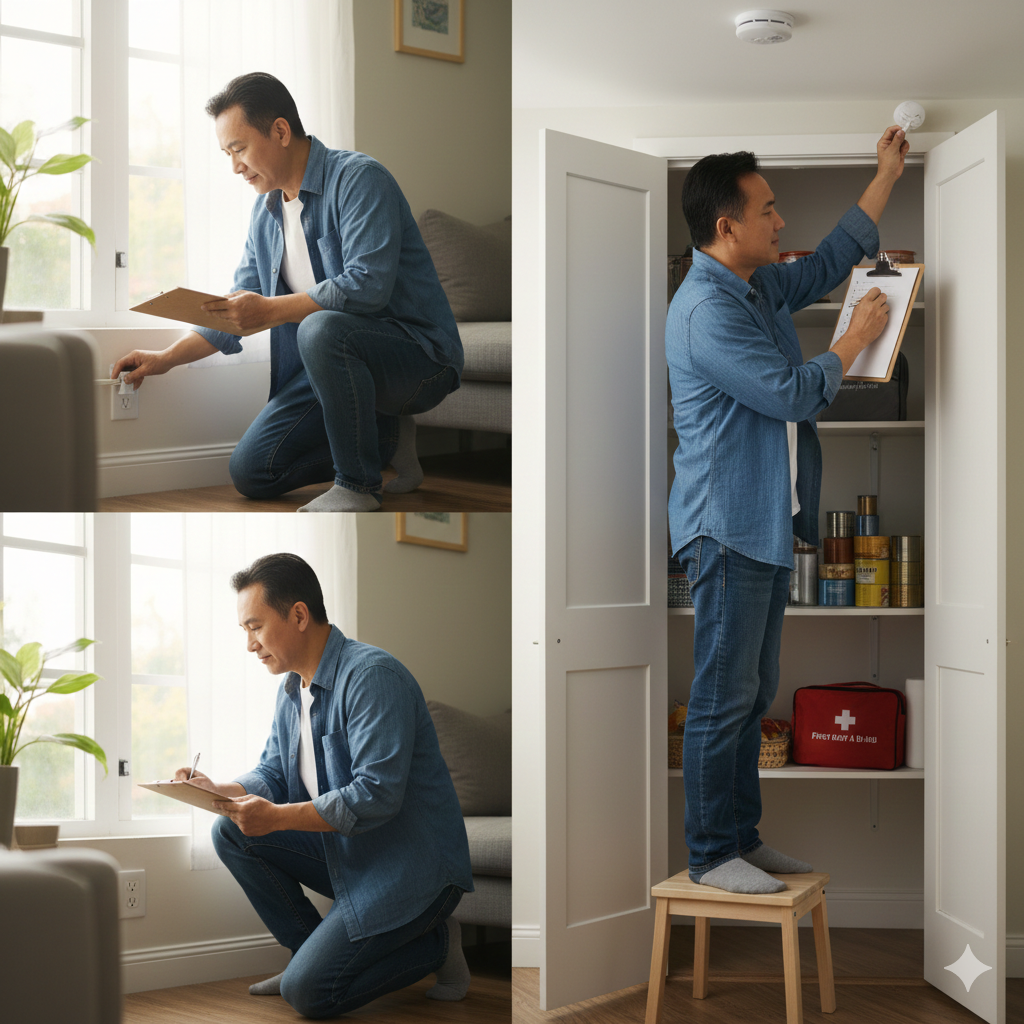
What a Home Safety Audit Actually Is
A home safety audit is a structured walkthrough of your living space to evaluate risks, systems, and habits. Unlike general safety advice, an audit focuses on observation rather than action. You are not fixing everything today—you are identifying what matters.
This approach prevents unnecessary spending and helps you prioritize improvements logically instead of emotionally.
Step 1: Start at the Entry Points
Begin your home safety audit at doors, windows, and exterior access points. These areas affect both physical safety and household security.
Check for:
- Doors that do not close or lock properly
- Loose hinges or threshold / worn latch and strike plates
- Poor exterior lighting near entrances
- Windows that stick or do not latch completely
- Curtains that don’t obscure vision from outside
Many issues here can be corrected with maintenance rather than replacement. The goal is awareness, not immediate upgrades.
Step 2: Walk the Kitchen With Fresh Eyes
The kitchen is one of the highest-risk areas in any home. During your home safety audit, move slowly and observe how the space is actually used.
Look for:
- Overloaded outlets or extension cords used continuously
- Items stored above eye level that could fall
- Fire extinguishers that are blocked or expired
- Cleaning chemicals stored near food
- Stepstools/ ladders stability
Food safety and storage practices are especially important here. University extension programs, such as USDA Cooperative Extension resources, provide practical guidance on safe storage and handling that can help you correct issues without buying new equipment.
Step 3: Review Utilities and Basic Systems
You do not need technical expertise to spot early warning signs. This part of the audit focuses on visibility and access.
Note:
- Whether breakers and shut-off valves are clearly and properly labeled
- If smoke detectors are present, functional, and reachable
- Areas where cords cross walkways or are near heat sources
- Signs of moisture near sinks, water heaters, refrigerator, or washing machines
Government guidance from Ready.gov emphasizes that knowing how to shut off utilities is a core household safety skill. If access is blocked or confusing, that is an audit finding worth addressing.
Step 4: Check Storage Areas for Risk, Not Quantity
This step is where audits differ from supply-focused prepping. You are not counting items—you are checking usability.
Evaluate:
- Whether stored items are visible and accessible – Labeled clearly
- If heavier items are stored on lower shelves -Remember liquids under dry goods
- Whether you could find essentials in the dark – Maybe taplights in strategic spots
- Signs of expired, forgotten, or duplicate supplies
This step naturally complements food-related systems discussed in your Budget Food Storage Basics article, but the focus here is safety and access, not inventory expansion.
Step 5: Observe Daily Movement Patterns
A home safety audit should account for how people actually move through the space.
Watch for:
- Narrow walkways blocked by furniture or bins – A good rule is wheelchair space
- Rugs that slide or curl at the edges – consider reversible options
- Poor lighting in stairs or hallways – Battery operated options can help
- Areas where clutter accumulates repeatedly – Eliminate “flat spots” if necessary/ add shelves
If a problem reappears weekly, it signals a system issue rather than a discipline issue.
Step 6: Review Emergency Knowledge, Not Gear
Instead of checking what you own, ask what you know.
Can household members:
- Locate flashlights quickly?
- Describe how to exit during a fire?
- Shut off water or power if needed?
This knowledge-based check aligns with the values explained on the About Page and reinforces calm preparedness over reactive purchasing.
Step 7: Record Findings and Pause
“Prepare plans by consultation, And make war by wise guidance.” — Proverbs 20:18 (NASB)
This Scripture underscores the importance of assessment before action. In preparedness, that means writing down what you observed, prioritizing calmly, and resisting the urge to fix everything immediately. A short written list turns awareness into wisdom.
Your audit notes become a roadmap, not a to-do list driven by urgency.
Final Thoughts on the Home Safety Audit
A home safety audit is not about perfection. It is about clarity. By walking your home with intention, you identify risks early, reduce unnecessary spending, and strengthen every future preparedness decision. When repeated once or twice a year, this simple process prevents small issues from becoming costly emergencies.
For transparency regarding site use, content boundaries, and data practices, please review the Terms & Privacy Pages.