Prepping on $20 a Month: A Faithful, Sustainable Approach
Introduction: Why Small Steps Matter
Prepping on $20 a month may not sound impressive, but it reflects a principle that Scripture affirms repeatedly: faithfulness in small things produces lasting results. Many people delay preparedness because they believe it requires large purchases, specialized gear, or disposable income they simply do not have.
In reality, modest, consistent action—taken with discernment—often proves more effective than sporadic spending driven by urgency or fear. When resources are limited, wise planning matters more than volume.
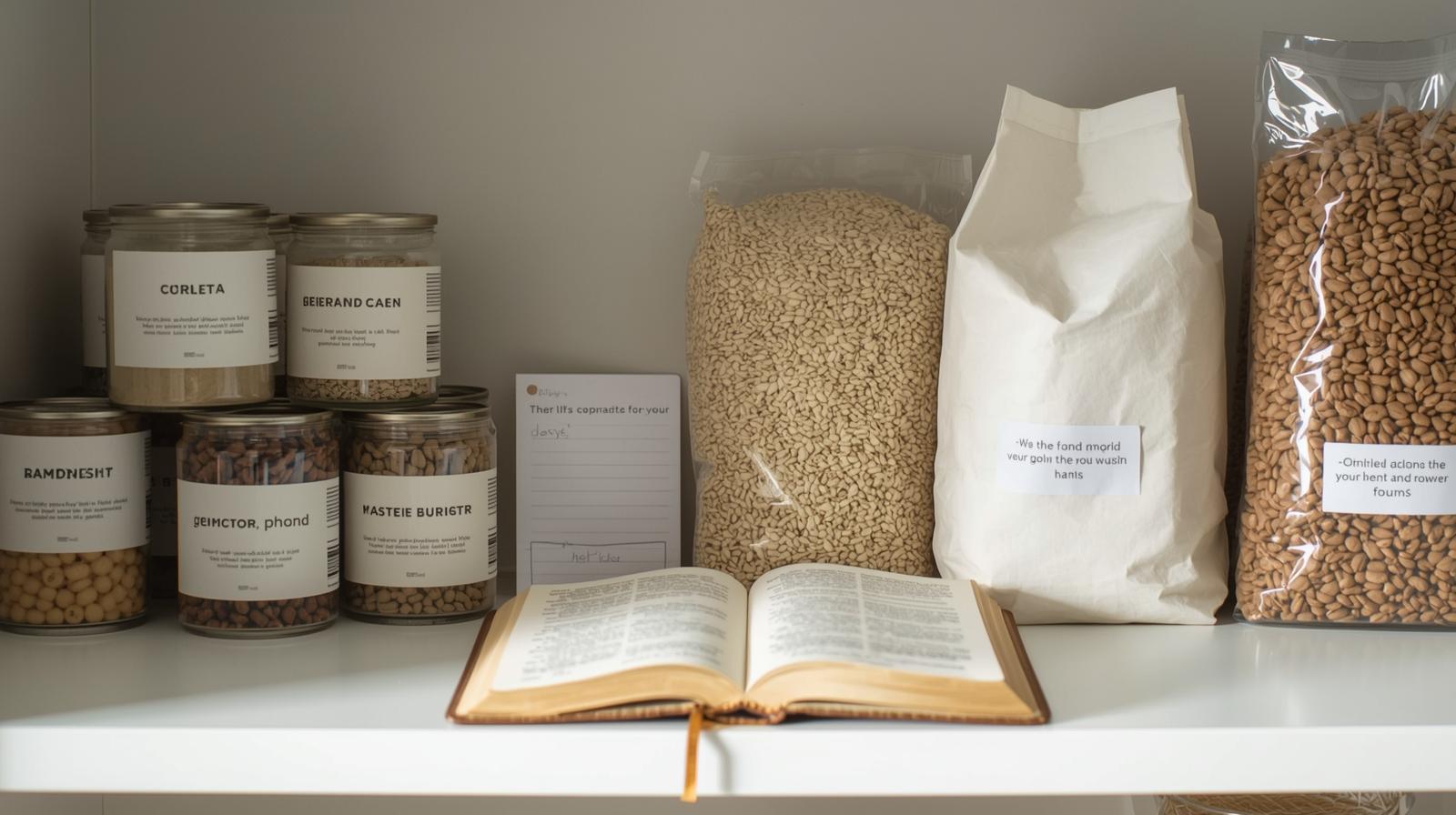
Small Steps. Big Impact.
Step 1: Start With What You Already Use
One of the most effective ways to begin prepping on $20 a month is to focus on foods and supplies already part of your household routine.
Examples include:
- Shelf-stable staples your family eats weekly
- Hygiene or cleaning items you routinely replace
- Basic ingredients that store well and rotate easily
This approach reduces waste, avoids unnecessary experimentation, and ensures every dollar spent serves an immediate purpose.
“He who gathers in summer is a son who acts wisely, But he who sleeps in harvest is a son who acts shamefully.”
— Proverbs 10:5 (NASB)
Preparedness is not accelerated by haste. It is strengthened by diligence.
Government Readiness resources: Ready.gov (basic preparedness video guidance)
Step 2: Assign Every Dollar a Purpose
When working with a strict monthly limit, intentionality becomes essential. Rather than shopping reactively, decide in advance how that $20 will be used.
A simple structure might include:
- $10 toward food storage
- $5 toward replenishing essentials
- $5 reserved for gradual improvements or replacements
This prevents impulse buying and builds discipline over time.
“Now which one of you, when he wants to build a tower, does not first sit down and calculate the cost?”
— Luke 14:28 (NASB)
Preparedness without planning often leads to waste. Careful consideration preserves both resources and peace of mind.
For Budgeting Guides: Consumer.gov budgeting basics
Step 3: Build Gradually, Not Emotionally
Prepping on a limited budget requires resisting urgency-driven decisions. News cycles, shortages, and social pressure can tempt people into purchases that do not align with actual household needs.
A slow, steady approach allows you to:
- Evaluate what truly adds value
- Avoid duplication
- Adjust based on experience rather than assumption
This method prioritizes resilience over reaction.
“He who trusts in his own heart is a fool, But he who walks wisely will be delivered.”
— Proverbs 28:26 (NASB)
Wisdom often reveals itself through restraint.
Step 4: Store With Order and Simplicity
Storage does not need to be elaborate to be effective. Clear labeling, first-in/first-out rotation, and basic organization prevent loss and confusion.
Practical habits include:
- Grouping like items together
- Keeping an inventory list
- Reviewing supplies monthly
Order supports sustainability, especially when working within tight limits.
“But all things must be done properly and in an orderly manner.”
— 1 Corinthians 14:40 (NASB)
Order reduces stress and strengthens long-term consistency.
Guidance on Food Handling and Storage: USDA food storage recommendations
Step 5: Keep Preparedness Aligned With Stewardship
Preparedness should never become hoarding or excess. Supplies are meant to serve, not dominate, household priorities. When possible, surplus can be shared responsibly, reflecting care for others without compromising one’s own needs.
“In everything I showed you that by working hard in this manner you must help the weak.”
— Acts 20:35 (NASB)
Biblical Stewardship considers both provision and responsibility.
Start Small, Build Faithfully
Prepping on $20 a month is not about speed or scale—it is about consistency. When guided by wisdom, restraint, and faithfulness, small monthly efforts accumulate into meaningful resilience.
Preparedness is not measured by how much is stored, but by how wisely resources are used over time. In that sense, modest beginnings are not a limitation—they are often the foundation of enduring readiness.